Saamanta and I responded to an invite on Couchsurfing to go with some fellow surfers to an event. It was a charity event in a small, urban village to provide people with medical services. Our couchsurfer friend, Chemilia, organized the event from which her youth group was volunteering.


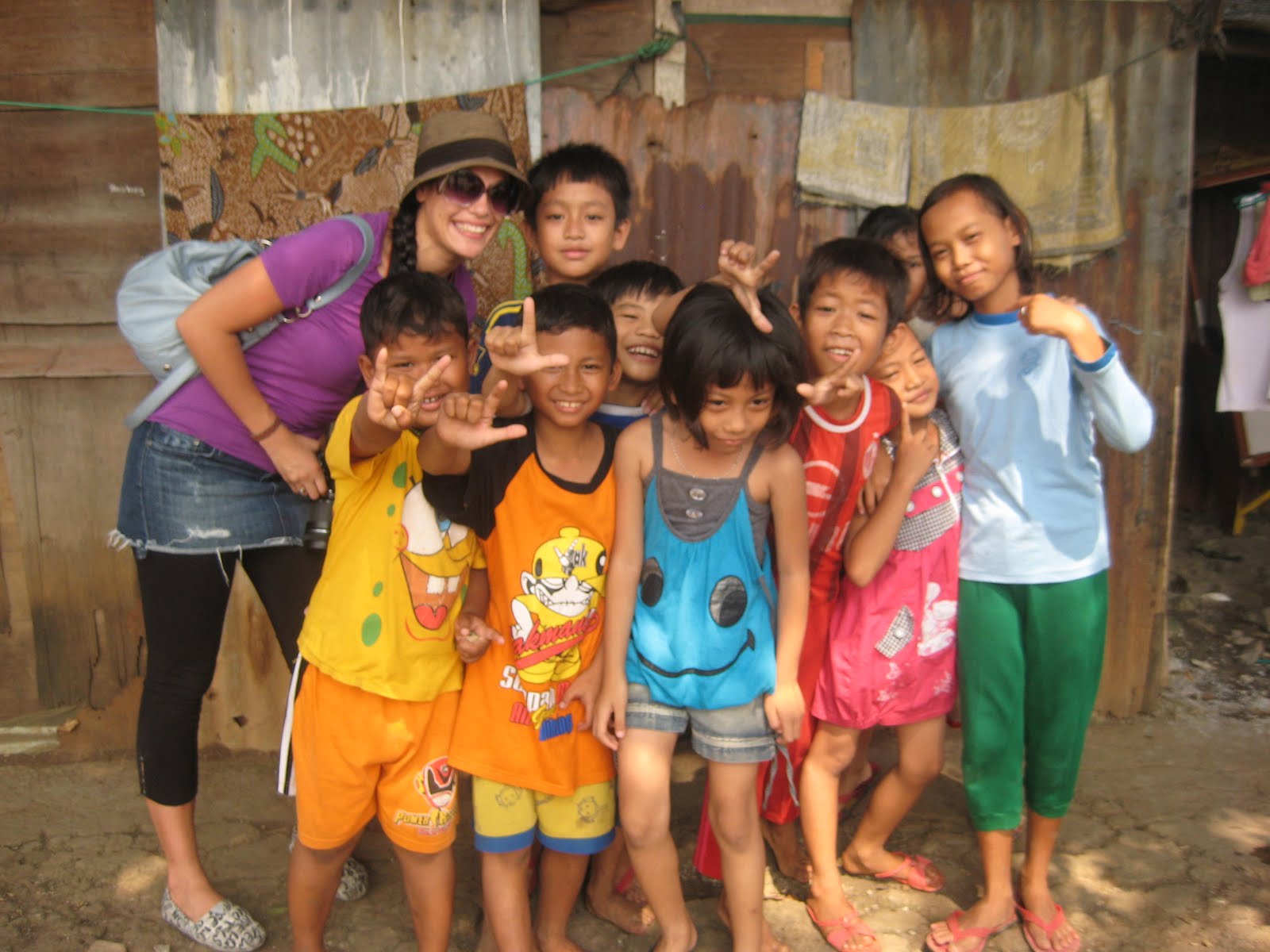
She offered Saamanta and I volunteer positions, but we felt we should respectfully decline considering we don't speak the language, belong to any of the organizations involved, and because our foreign presence in the village was enough of a distraction on it's own. We observed the charity event for a bit, then decided to explore the village and mingle with locals. It took all of a minute to notice a group of about 8 kids following close behind.

This village happens to be the home of the Jakarta monkey entertainers, and the monkeys themselves. Most visitors to Jakarta will likely remember the first time they witnessed one of the masked monkeys in the streets. Usually the scene is a man in a squatting position with sounds of ancient Javanese music coming from an old boombox next to him. He also is holding onto a small metal chain. The chain is connected to what seems to be a fully dressed doll that is standing upright. That seems weird enough, but the freaky part is when the doll turns and looks straight at you. You realize that there is a living body inside the doll, and you are officially freaked!
Though, your fear turns to sympathy in the next few moments. The man firmly yanks the chain that is tied to the monkey's neck. A small plastic motorbike is part of the next performing act for the monkey. Since the small bike doesn't have a motor or petals, it accelerates with an even harder yank on the chain. The monkey balances with impressive skill for his short ride until the chain tightens and he his pulled in the opposite direction for another ride. This continues along with a few other tricks until most people who are human are disgusted and would rather pay the man to stop the show than to continue watching. The crowd usually is never aware of the village and living conditions of where this man and monkey "entertainer" call home.

Within the first few steps of our village exploration, we saw about five small dolls with strings around their necks, dangling from a roof. Admittedly, that was a bit spooky. Despite the eeriness, we pressed on and made sure our gang of six-year old unofficial guides were still at our heels. We then came across a structure with about nine cubby-sized cages, each just barely big enough for a single monkey to fit. At the base of the structure were sprinklings of rice grains from a recent meal. I didn't even know monkeys ate rice, but I guess one alters their diet when provided with but one source of nutrition.
The small dirt road came to an intersection of three paths. Each path is the size of a hallway that leads to and runs directly in front of the impoverished residences. We asked our group of shy, giggly guides, "Belok kiri? Terus? Kanan?" ("Turn left? Straight? Right?"). A small voice yelled "Kiri!" So left we went.

About 50 meters down the "hallway", we came to a litter-filled stream. On the opposite bank, there were women collecting recyclables from the flowing brown waters with custom-made bamboo nets. On our side of the stream, were two more small structures with monkeys locked inside. The setting was really something so we snapped some photographs. We decided to buy some bananas from a warung (small shop) behind us and give some to the monkeys. The children all seemed afraid of the monkeys and would not go near them. When one child finally stepped forward, we saw why. One of the monkeys sprang towards the child baring its fangs. Promptly one of the monkey trainers stepped in to tighten the chain so it couldn't jump out as far. When the monkeys saw the man coming, they all hid in the back of their cages in fright. The monkey was secured and we glanced back to the (now about 12) kids. We noticed two of the kids eating the bananas we'd purchased to feed the monkeys. They looked up, almost apologetically with a half eaten banana in hand. Reality setting in quickly, we handed out the rest of the bananas to the kids of the group. One father of a child thanked us for giving their child food.


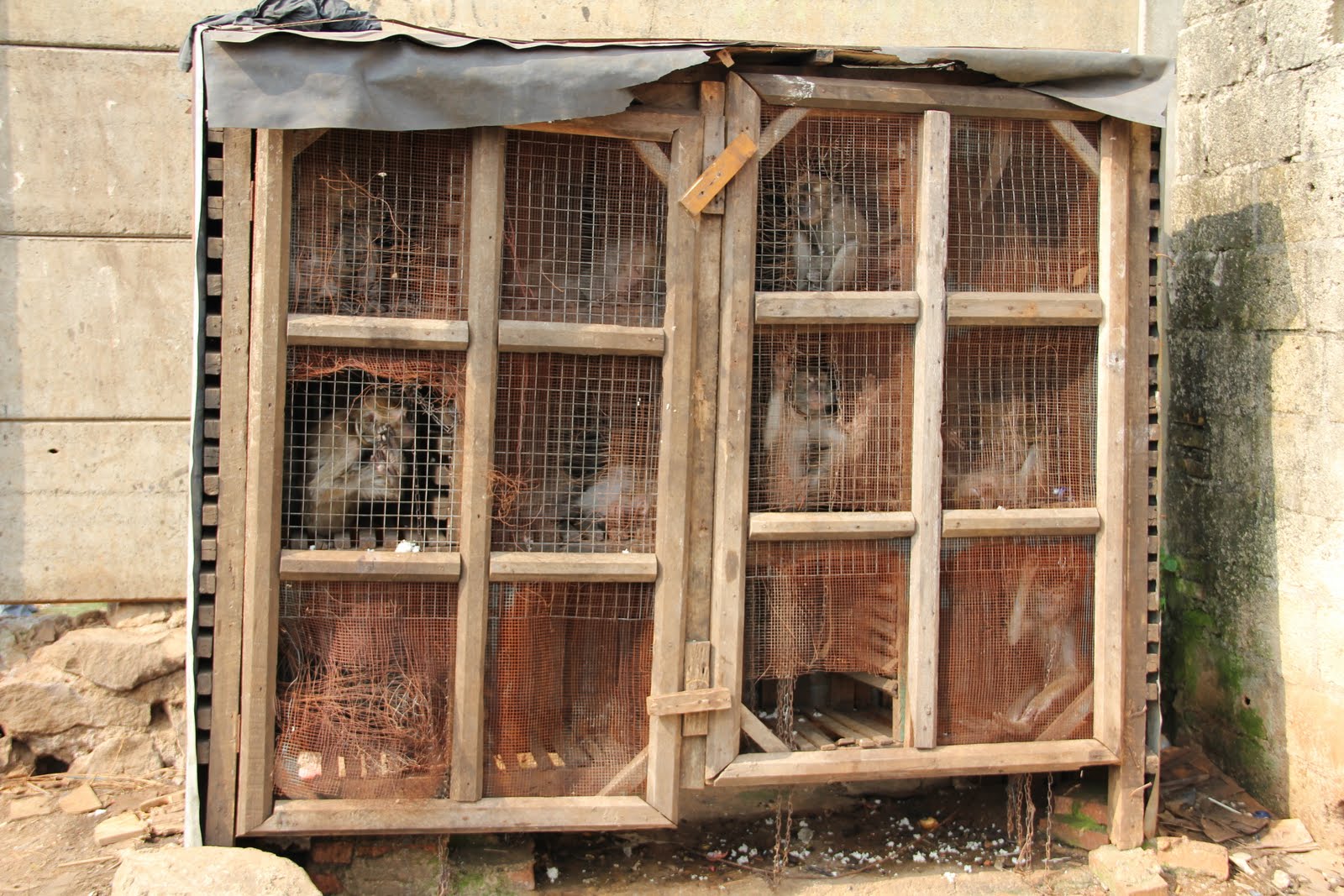


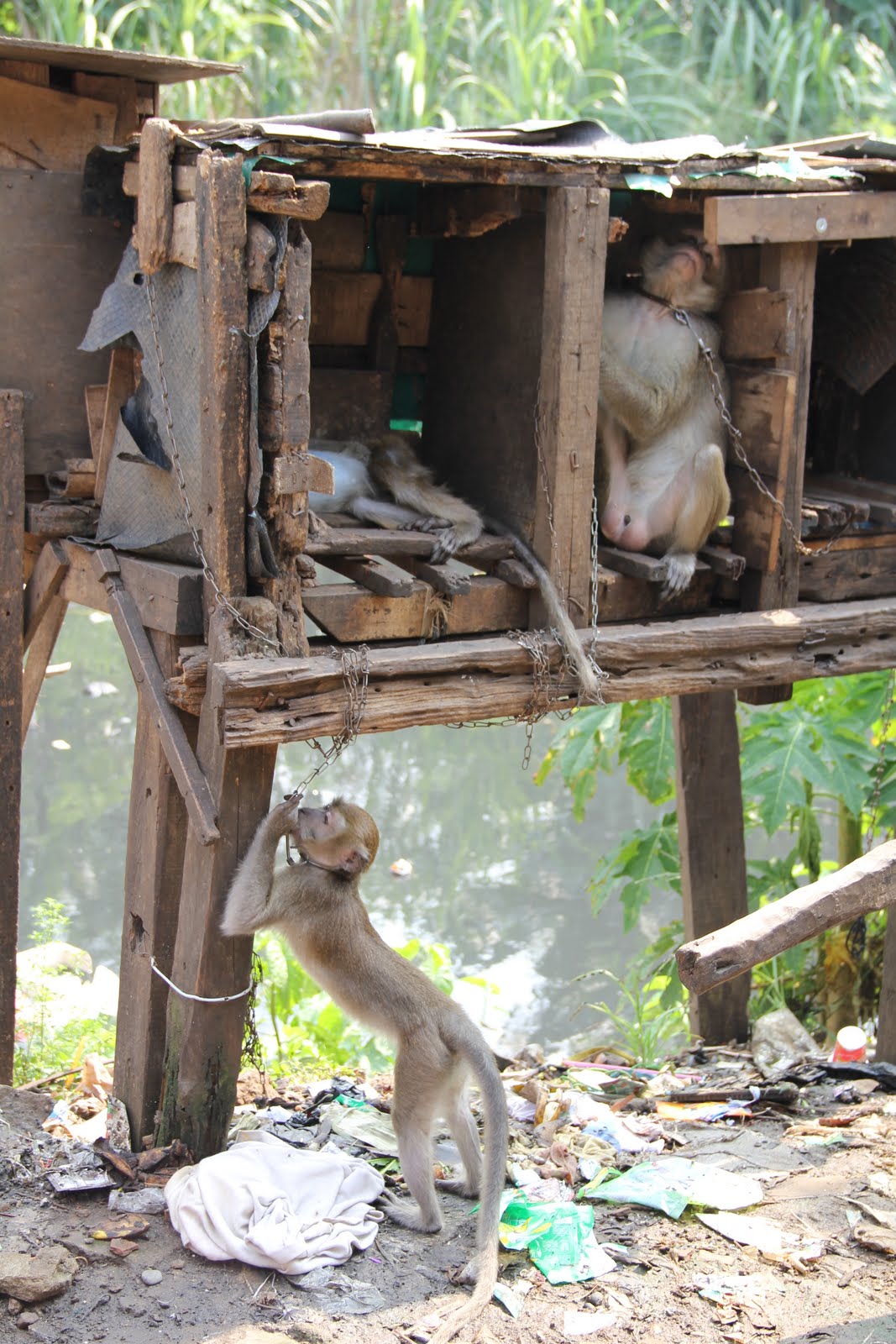
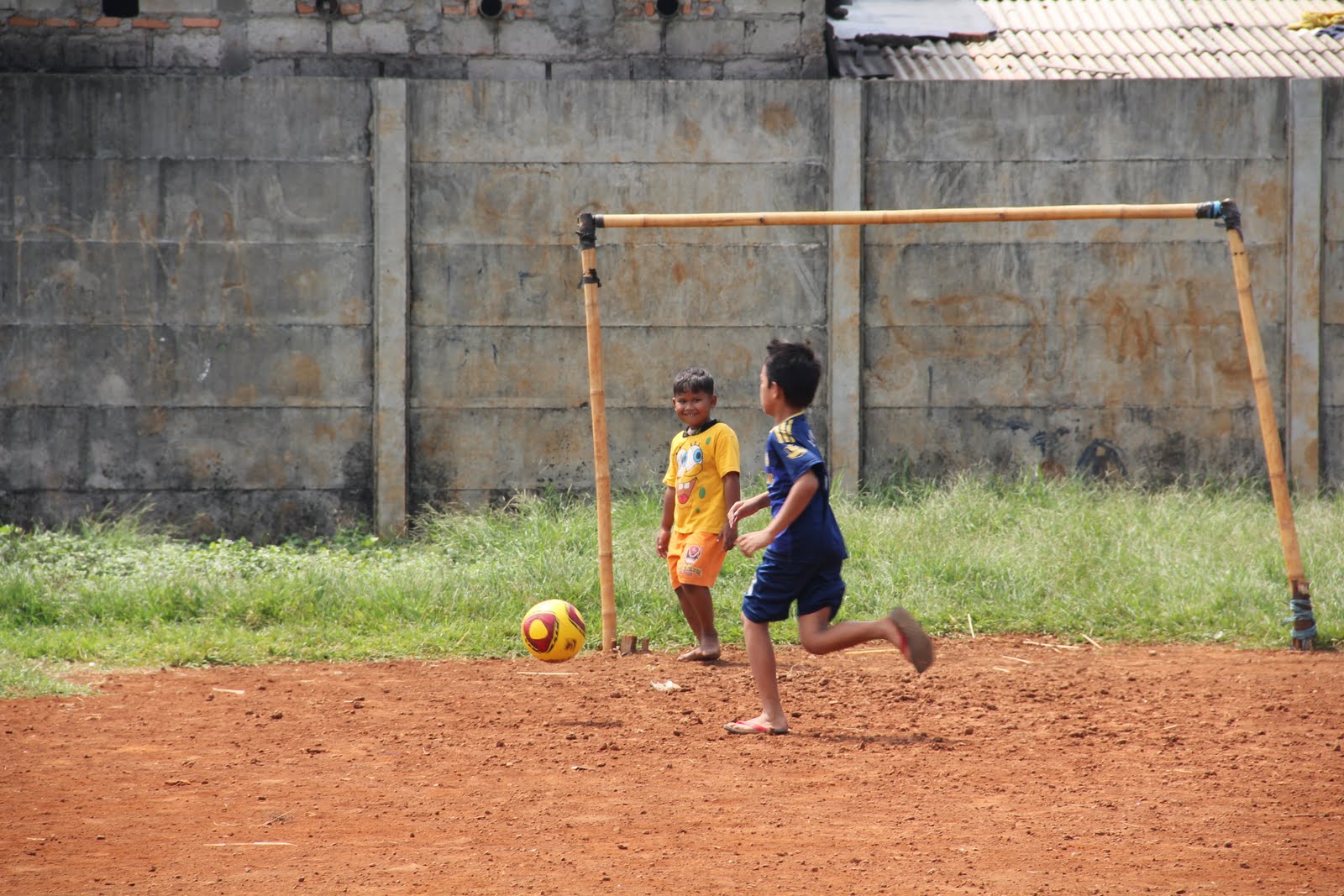
Our tour continued throughout the sweltering village for about an hour. We saw a big fat old monkey that was tied to a tree and a tiny baby monkey in one of the small walkways. Our group of kids were smiling ear to ear during our curious journey of their their slum. They showed us a secret hole in the wall in which to crawl through to a giant field that they used to play soccer on.
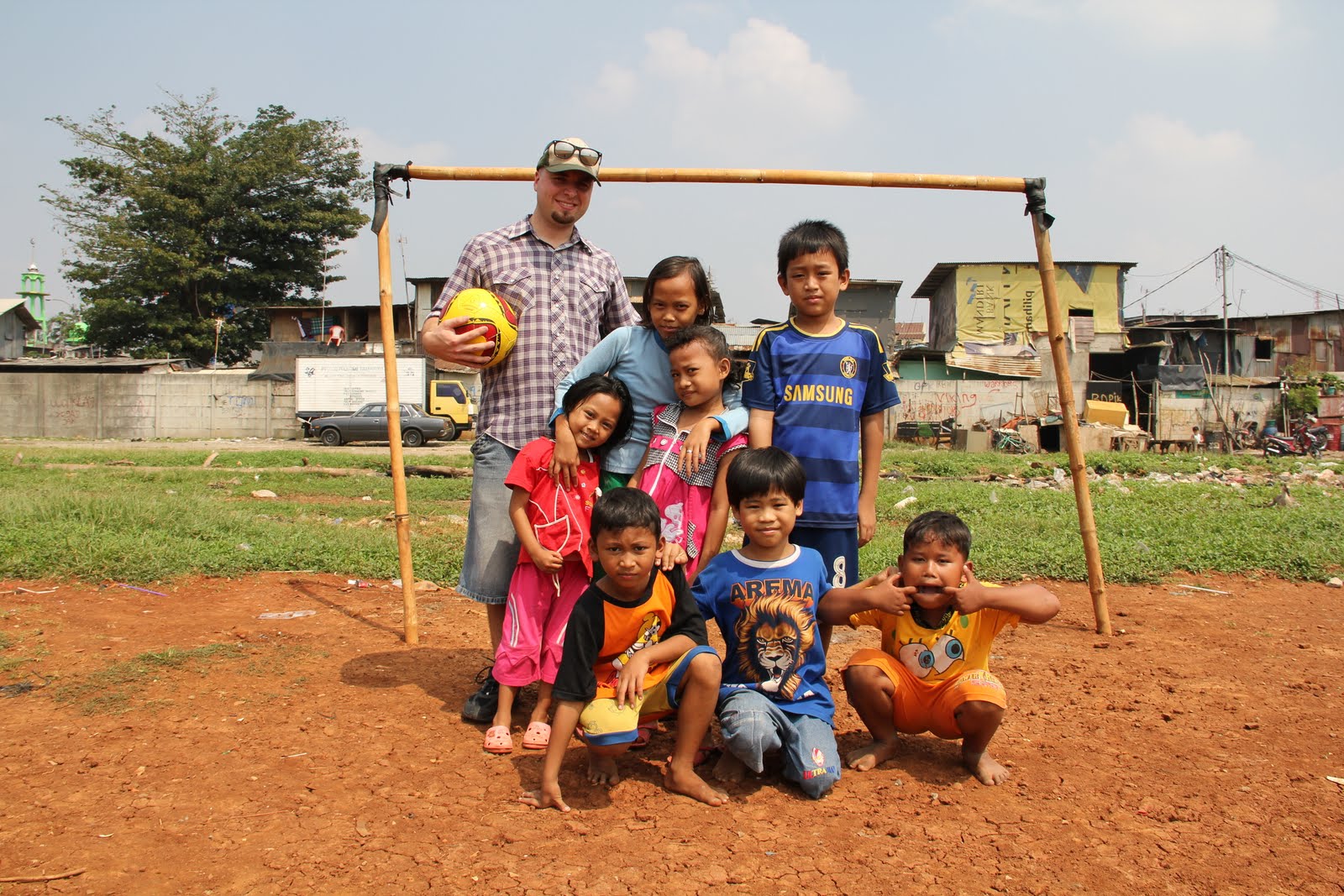
For their help "guiding" us throughout the day, we ended the day with a walk to the market to buy the kids a soccer ball. The soccer ball elicited great cheers and a run through the village to the soccer field. The feeling of having won a great prize was in the air.

We later learned that the monkeys in the village are usually sick with hepatitis and other retro-viruses that don't show symptoms in humans for several years. So, to pet a monkey or touch one could mean a lifetime of diseases for a person. The entertainers rent out the monkeys from the monkey owners for Rp. 30,000 (about $3) per day. Their goal is to hit the streets and hope to earn much more in tips, if not break even.